
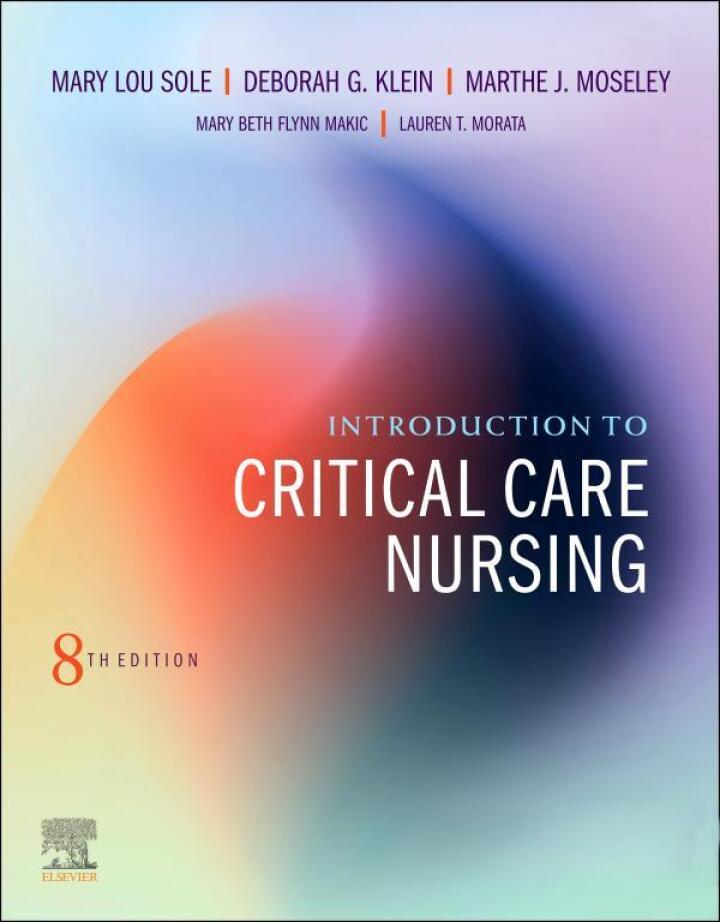
Introduction to Critical Care Nursing
Begin your journey to mastering the essential concepts, technologies, and practices of critical care nursing! The 8th Edition of Introduction to Critical Care Nursing equips you to deliver safe, effective, and patient-centered care across diverse high-acuity, progressive, and critical care settings. With evidence-based principles, the book features realistic case studies and reflects the latest advancements in the field. Disorders are systematically organized by body system or specific situations, and nursing management chapters provide quick-reference care plans. This clear and concise textbook is designed to enhance your knowledge and clinical reasoning skills, ensuring your success in today’s complex critical care environments.
Throughout the text, Critical Reasoning Activities foster the development of clinical nursing judgment, equipping you for success on the Next-Generation NCLEX-RN® Exam. The focus on QSEN competencies ensures you acquire the essential knowledge, skills, and attitudes necessary to deliver safe, high-quality healthcare in high-acuity, progressive, and critical care environments. Evidence-Based Practice boxes demonstrate the application of research evidence in addressing patient care challenges, including nursing implications and AACN’s updated Levels of Evidence: A, B, C, D, E, and M.
The Universal Collaborative Plan of Care for Critically Ill Patients highlights essential aspects of interprofessional care relevant to nearly all critically ill individuals. Individual Plans of Care prepare you for clinical practice by outlining patient problems, outcomes, and nursing assessments and interventions, complete with rationales. Engaging case studies encourage you to apply theoretical concepts to real-world scenarios, testing your clinical judgment with patient-specific cases and lab results.
Clinical Alerts draw attention to potential issues and concerns, enhancing patient safety and clinical quality, while Laboratory Alerts underscore the significance of lab test results in critical care nursing. Medication tables provide comprehensive details on the actions, indications, dosages, routes, side effects, and nursing implications of medications frequently used in critical care settings.
Additionally, the textbook Introduction to Critical Care Nursing, 8th Edition, covers cardiac assistive devices, including the ECMO device for extracorporeal life support, as well as smaller, portable bedside options. The emphasis on noninvasive hemodynamic monitoring reflects its increasing importance, and the infection control section addresses the QSEN safety competency, safeguarding patients against the rise of drug-resistant infections. Nearly 300 vibrant photographs and illustrations enhance comprehension of key concepts and equipment, ensuring a deeper understanding of today’s complex critical care landscape.
978-0323641937, 978-0323759663, 978-0323759687, 978-0323749732, 978-0323759670, 978-0323752008
PLEASE NOTE: This only includes Introduction to Critical Care Nursing, 8th Edition, in original PDF format. It will be emailed IMMEDIATELY after payment. No access codes or other media included.




Reviews
There are no reviews yet.